


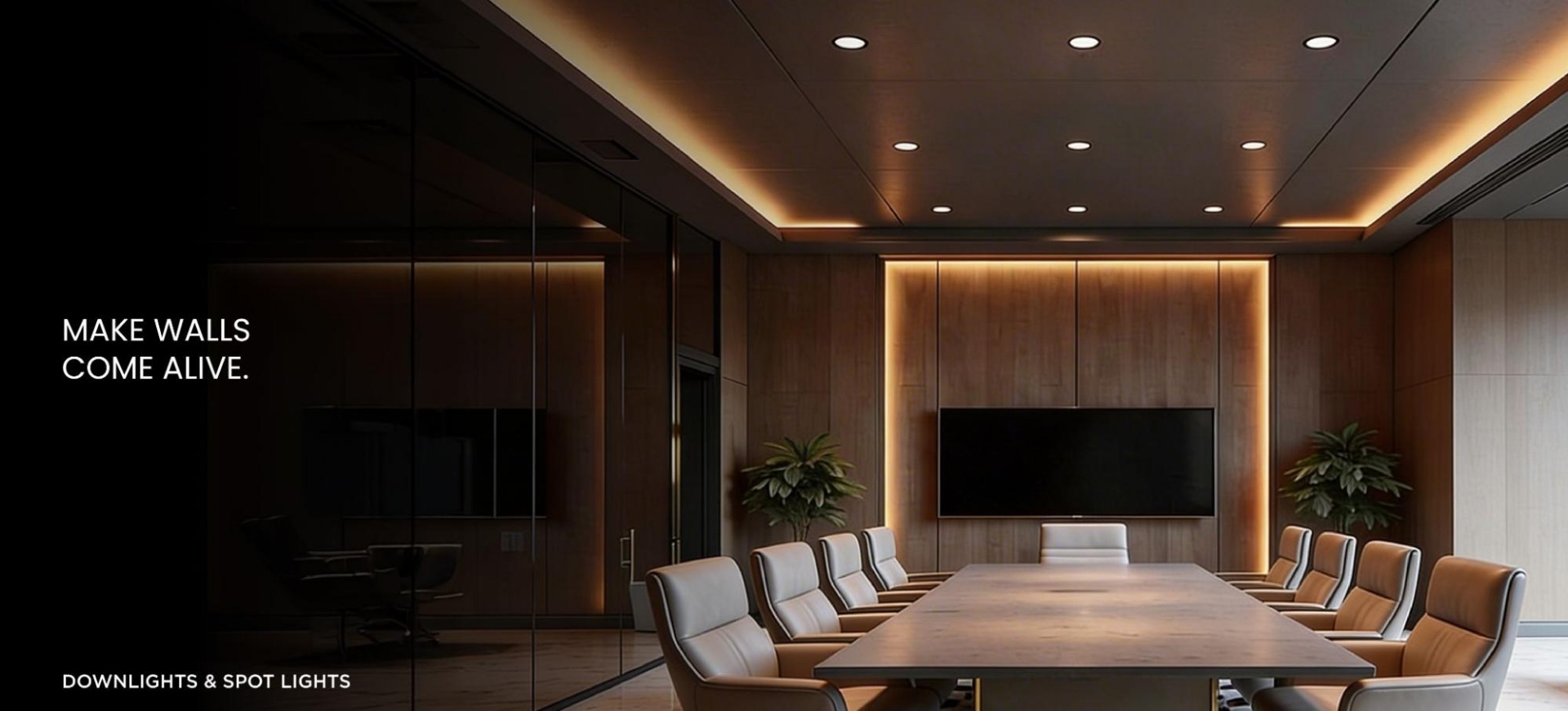
Lighting transcends mere illumination to transform a plain wall into a striking focal point, enhance textures, and make artwork look gallery-worthy. The right combination of interior wall lights, downlights, wall washers, and spotlights can instantly elevate the character of your interiors.
In modern homes, lighting has become a powerful design tool. At Jaquar, we design lighting solutions that help you achieve this balance of aesthetics and performance. This guide will further explain how different lighting techniques help highlight art and wall textures, and how you can use them effectively in your own space.
How Different Lighting Enhances Wall Textures and Artwork
Every wall surface reacts differently to light. A matte-painted wall, a textured stone finish, wooden panelling, wallpaper, or a canvas painting will all reflect and absorb light in unique ways. This is why selecting the right interior lights for home is essential.
- Smooth painted walls benefit from soft, even illumination that avoids harsh shadows.
- Textured surfaces such as brick, stone, or 3D panels look more dramatic when the light from wall washers grazes across them at an angle.
- Artwork and paintings require focused light that enhances colour and detail without glare.
- Wall niches and decor elements stand out when illuminated with directional lighting.
Layering different types of interior wall lights allows you to control contrast, depth, and focus. When done correctly, this layered lighting approach makes walls look rich, dimensional, and sophisticated.
Lighting Techniques to Highlight Walls and Art
Let us take a look at some of the best lighting techniques to highlight walls:
Spotlights
A spotlight is a focused, directional light that highlights a specific area or object. It is one of the most effective ways to draw attention to artwork or architectural features.
Where to use it on a wall:
- Above paintings or framed photographs
- On textured accent walls
- To highlight sculptures or wall design
How it helps:
A spotlight creates a clear focal point, enhancing colours and textures while separating the highlighted element from the rest of the wall. It adds drama and depth, making the artwork appear more vibrant.
Placement tips:
Install the spotlight at a 30-degree angle from the artwork to minimise glare and shadows. Ensure the beam width matches the size of the piece; a beam that is too wide will dilute the focus, while one that is too narrow may create harsh contrasts. When using multiple wall spotlights indoors, maintain equal spacing for a balanced effect.
Downlights
Downlights are recessed (requiring a false ceiling) or surface-mounted fixtures that direct light downward in a clean, subtle way. They are widely used in modern interiors for layered illumination.
Where to use them on a wall:
- To wash light down a feature wall
- Along corridors to create a rhythm of light
- Above textured wall panels
How they help:
Downlights create a soft wall-washing effect that makes walls appear taller and more refined. When placed slightly away from the wall, they produce gentle shadows that enhance textures without overpowering the design.
Placement tips:
Position downlights approximately 30-45 cm away from the wall to achieve even light distribution. Space them evenly to avoid dark patches. For textured surfaces, place them closer to the wall to create a grazing effect that emphasises depth. Used strategically, downlights can transform a simple wall into a visually dynamic surface.
Interior Wall Lights
Interior wall lights include sconces and decorative fixtures that add both functionality and style.
Where to use them on a wall:
- On either side of artwork or mirrors
- Along hallways
- On feature walls in living rooms
How they help:
Interior wall lights create balanced, ambient lighting. They soften shadows and add symmetry to a space. When placed strategically, they frame artwork beautifully and enhance overall wall aesthetics.
Placement tips:
Mount them at eye level (around 150-170 cm from the floor). For symmetry, install in pairs. Ensure the light output complements other interior lights for home rather than overpowering them.
Choosing the Right Interior Lights for Home
When selecting interior lights for home to enhance walls, consider the following:
- Beam Angle: Look for narrow beams to highlight artwork and wider beams for wall washing.
- Colour Temperature: Choose warm tones for living spaces and neutral tones for contemporary settings.
- Layering: Combine spotlight, downlights, and interior wall lights for balance.
- Dimming Options: Consider adjustable brightness, as it allows better mood control.
- Glare Control: Use anti-glare fixtures to maintain visual comfort.
By carefully layering different types of wall lights, you can create depth, elegance, and a premium finish.
Elevate Your Walls with Jaquar Lighting
At Jaquar, we understand that lighting defines the way your interiors feel. Our range of downlights and wall spotlights indoor is designed to bring out the best in your walls, artwork, and textures.
With precision-engineered optics, elegant finishes, and thoughtfully designed fixtures, we help you create lighting that enhances rather than overwhelms. Whether you are highlighting a painting, enhancing a textured wall, or adding subtle ambience, our interior lights for home are crafted to deliver both performance and aesthetics.
Explore our wall lights to transform your walls into statement features that reflect sophistication and refined design.
FAQs
A focused spotlight or adjustable wall spotlights indoor work best for artwork. They direct light precisely onto the piece, enhancing colours and details without unnecessarily illuminating the surrounding wall.
For an even wall-washing effect, downlights are usually positioned 30-45 cm away from the wall. This placement helps avoid harsh shadows while ensuring balanced illumination.
Warm white light between 2700K and 3000K is generally recommended. It creates soft shadows that highlight texture depth while maintaining a premium and inviting ambience.
Interior wall lights are best used as part of a layered lighting plan. While they provide excellent accent and ambient lighting, they should complement ceiling fixtures rather than completely replace them.
Install the spotlight at roughly a 30-degree angle to the artwork. Avoid placing the fixture directly above eye level or in the viewer’s line of sight to minimise glare and reflections.
Yes. When positioned thoughtfully, wall spotlights indoor can add depth and dimension to smaller rooms, making them feel more spacious and visually engaging.
A spotlight casts a focused beam of light across the wall, creating subtle shadows that bring out the surface’s depth and details. This contrast enhances textures, making patterns and finishes appear more defined, dramatic, and visually engaging.