


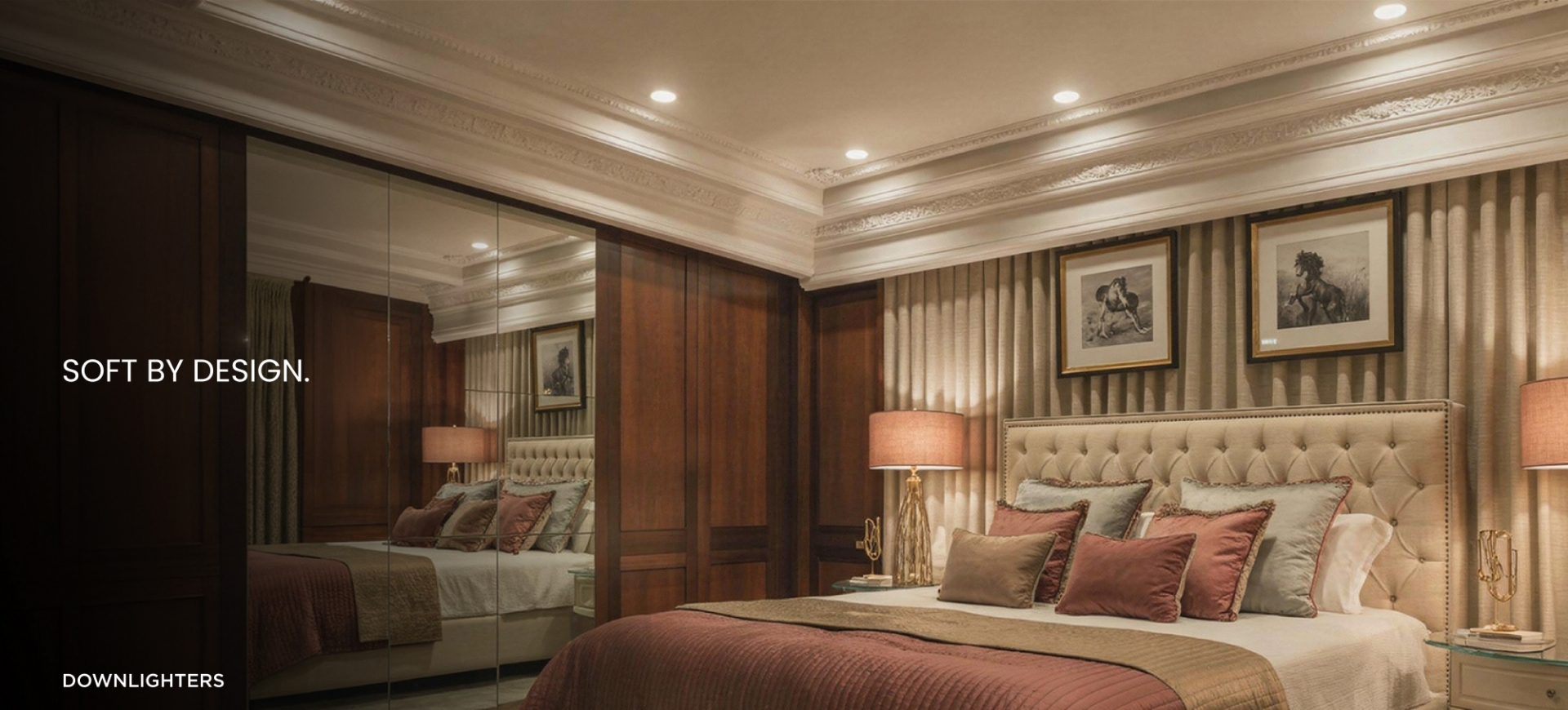
You might not notice it consciously, but lighting plays a major role in how your bedroom feels. A room with harsh white light can feel clinical and uncomfortable, while a dimly lit space may look cosy but become impractical for daily use. The right bedroom lighting falls somewhere between functional for everyday tasks and soft enough to help you relax and unwind.
At Jaquar, we understand that, unlike living rooms or kitchens, bedrooms are personal spaces. They are used for sleeping, reading, dressing, scrolling through your phone, and sometimes even working. This means the lighting must be flexible, layered, and well-balanced.
In this guide, we break down how much light a bedroom really needs, how to choose the right types of bedroom lights, and how to design a lighting plan that feels comfortable, modern, and practical.
How Much Light Does a Bedroom Actually Need?
Bedrooms do not require very high brightness. In fact, overly bright lighting can disturb the calm atmosphere that a bedroom should have. From a technical standpoint, a bedroom typically requires approximately 100-150 lux for general lighting. This is enough to move around comfortably without feeling overwhelmed by light.
However, certain activities require more focused illumination:
- Reading in bed: around 200-300 lux
- Dressing or using a mirror: around 300 lux
- Wardrobe interiors: slightly higher brightness for clarity
This is why relying on just one central light is never ideal. The most effective approach is to determine how to distribute light across different zones of the room.
The Concept of Layered Bedroom Lighting
Good bedroom lighting is always layered. This means using different types of lighting for different purposes, ensuring balanced illumination throughout the space.
Ambient Lighting: The Base Layer
This is your primary light source, usually provided by ceiling lights for the bedroom. It ensures the entire room is evenly lit and sets the overall brightness level.
Task Lighting: The Functional Layer
This includes lights used for specific tasks such as reading, working, or grooming. A table light near the bed or focused lighting near a wardrobe falls into this category.
Accent Lighting: The Mood Layer
Accent lights add softness and visual interest. This includes strip light behind the headboard, soft wall lighting, or decorative fixtures.
When these three layers work together, your bedroom feels comfortable at any time of the day – bright when needed, soft when relaxing.
Choosing the Right Ceiling Lights for Bedroom
Ceiling lights for the bedroom form the foundation of your lighting setup. They are responsible for general visibility and should provide uniform, glare-free illumination.
For most bedrooms, flush-mounted or semi-flush fixtures work well, especially in rooms with standard ceiling heights. If your ceiling is higher, you can explore more decorative options.
Key things to consider:
- Always choose warm white light (2700K-3000K)
- Avoid very cool or bluish light
- Prefer dimmable fixtures for flexibility
Ceiling lights should provide a soft, comfortable glow. Their role is to create a calm base that complements the space.
Why LED Lights for Bedroom Make Sense
Today, LED lights for the bedroom are the most practical choice. They are energy-efficient, long-lasting, and available in a wide range of colour temperatures and designs.
From a technical perspective, LEDs offer:
- Up to 80% less energy consumption
- Lifespan of 30,000-50,000 hours
- Minimal heat emission
- Stable light output over time
This makes them ideal for both ambient and accent lighting. Whether it is ceiling fixtures, strip lighting, or a table lamp, LEDs ensure consistent performance with lower electricity costs.
Using Downlights for a Clean, Modern Look
Downlights are recessed lights installed in the ceiling. They provide focused, directional lighting and are often used in modern bedroom designs.
They work particularly well for:
- Highlighting wardrobes or dressing areas
- Creating soft pools of light in corners
- Providing subtle ambient lighting when spaced evenly
The key with downlights is moderation. Too many can make the room feel like an office. Use warm-toned downlights, ideally paired with dimmers, for better control.
Adding Character with a Pendant Light
A pendant light adds personality and design value to a bedroom. Instead of traditional bedside lamps, pendant lights can be suspended on either side of the bed.
This approach:
- Saves space on bedside tables
- Creates a hotel-style aesthetic
- Adds vertical visual interest
Pendant lights should use soft, warm bulbs and be positioned at eye-friendly heights to avoid glare. They work best as accent or task lighting, not as the primary light source.
Creating Soft Ambience with Strip Light
A strip light is one of the most effective ways to add indirect lighting. These flexible LED strips are usually hidden behind panels or furniture.
Common placements include:
- Behind headboards
- Under the bed
- Inside wardrobes
- Along the ceiling coves
Strip lighting produces a diffused glow that feels luxurious and relaxing. It is ideal for nighttime use and creates a layered, premium lighting effect.
The Practical Role of a Table Light
A table light remains one of the most functional types of bedroom lighting. It is essential for reading, late-night phone use, or simply creating a cosy corner.
Good bedside table lamps should:
- Offer focused but soft light
- Be easy to switch on and off
- Match the room’s design style
They also help visually balance the room and add warmth to the overall lighting scheme.
Understanding Colour Temperature in the Bedroom
Colour temperature has a psychological impact. For bedrooms, warm tones are always preferable.
- 2700K-3000K: Warm white (ideal for relaxation)
- 3500K-4000K: Neutral white (acceptable for wardrobes)
- Above 4000K: Cool white (not recommended)
Warm lighting helps your body relax and prepares your mind for sleep, whereas cool lighting stimulates alertness and is better suited for workspaces.
How to Choose the Right Lighting for Your Bedroom?
When planning bedroom lighting, think in terms of zones rather than fixtures.
Ask yourself:
- Where do I read or work?
- Do I need lighting inside wardrobes?
- Do I want mood lighting?
- How big is the room?
Then build your lighting using:
- Ceiling lights for bedroom as the base
- LED lights for bedroom for efficiency
- A pendant light for style
- Downlights for focus
- Strip light for ambience
- A table light for bedside tasks
This approach ensures your lighting adapts to real-life use, not just aesthetics.
Bedroom Lighting with Jaquar: Designed for Real Living
The perfect bedroom prioritises atmosphere and comfort over sheer brightness. By combining layered lighting, warm colour temperatures, and energy-efficient technology, you can create a space that supports both everyday activities and deep rest. With our thoughtfully engineered lighting solutions, your bedroom lighting becomes part of your comfort.
At Jaquar, we design bedroom lighting solutions around real homes and real lifestyles. Beyond brightness, our focus lies in creating lighting that feels comfortable, efficient, and visually balanced. From contemporary ceiling fixtures and high-performance LED systems to stylish accent lights and smart options, our range is built to support every lighting layer your bedroom needs.
FAQs
A bedroom requires around 100-150 lux for general ambient lighting. However, this should be supported by task and accent lighting to create a layered setup that adapts to different needs.
Warm white light (2700K-3000K) is ideal for bedrooms as it promotes relaxation and improves sleep quality. Cooler tones are better suited for workspaces and kitchens, not resting zones.
Yes, LED lights are the best choice for bedrooms because they are energy-efficient, long-lasting, and available in a wide range of colour temperatures and brightness levels. They also produce minimal heat, making them safe for prolonged use.
Layered lighting combines ambient, task, and accent lighting. This approach prevents harsh brightness, improves visual comfort, and allows you to adjust lighting based on different activities throughout the day.
Dimmable lighting is highly recommended as it allows you to control brightness levels for different moods and times of day, from bright morning light to softer evening illumination.
For small bedrooms, ceiling lights paired with wall-mounted fixtures or bedside lights work best. This avoids clutter, saves floor space, and ensures even light distribution without overpowering the room.
 Bath :