


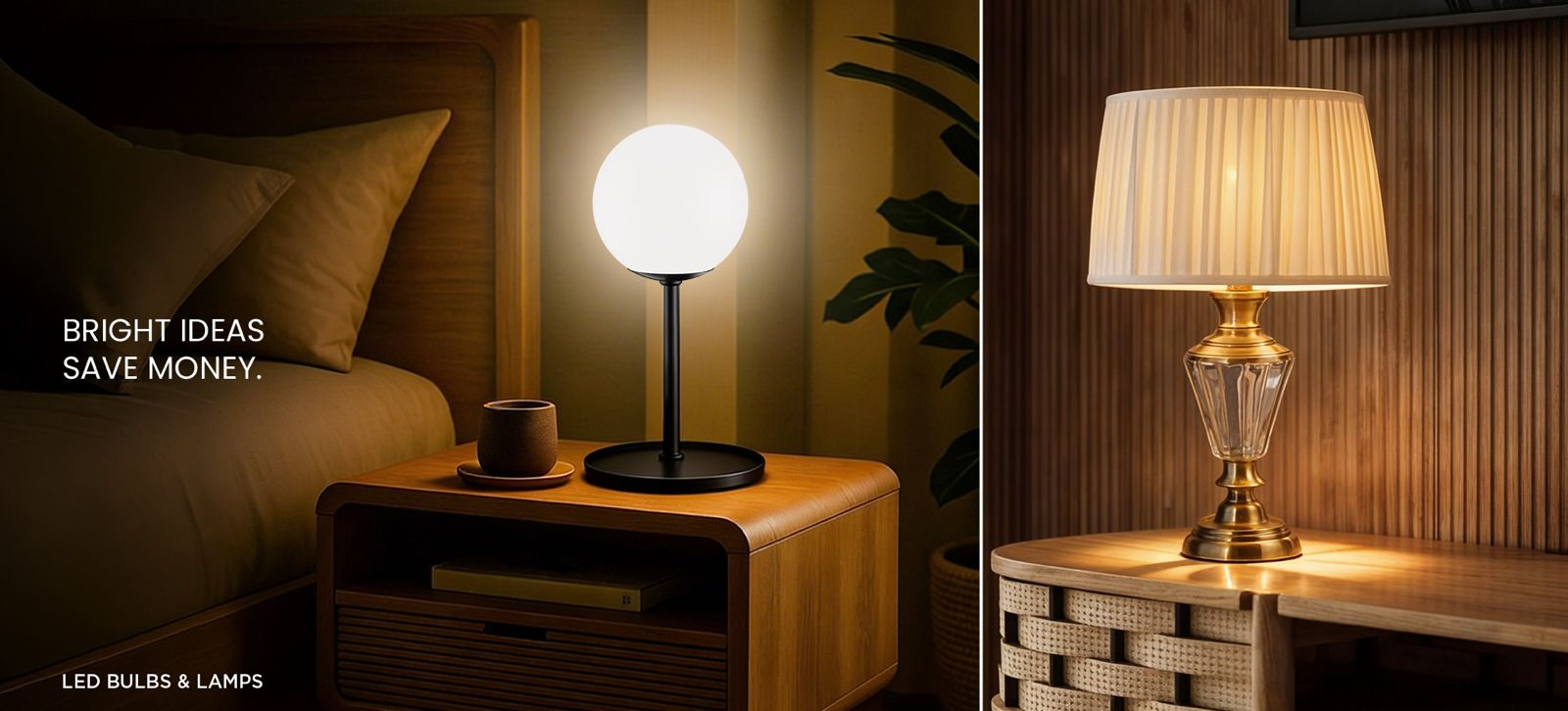
Lighting plays a crucial role in how we experience our homes and workspaces. It affects comfort, productivity, ambience, and even electricity bills. When choosing between LED lamps and traditional lamps, most homeowners and designers want clear answers: Which option saves more energy? Which lasts longer? And which offers better value over time?
At Jaquar, we believe informed decisions lead to better lighting experiences.
What are Traditional Lamps?
Traditional lamps have been used for decades and generally use incandescent and halogen bulbs. They work by heating a filament inside the bulb until it produces a warm light.
However, a large portion of the energy consumed by these lamps is converted into heat rather than visible light. This results in more electricity consumption, shorter lifespan, and significant heat generation.
What are LED Lamps?
LED lamps (Light Emitting Diode lamps) use semiconductor technology to produce light. Instead of heating a filament, they generate illumination through the movement of electrons, which is far more energy-efficient.
An LED lamp bulb offers lower energy consumption, minimal health emission, and longer operational life. This makes LED technology a preferred choice for modern homes and commercial spaces.
LED vs Traditional Lamps: Which Uses Less Power?
One of the biggest differences between LED lamps and traditional lamps is energy efficiency.
Power Consumption
Traditional incandescent bulbs often use 60 watts or more to produce standard brightness. In contrast, an LED lamp bulb can provide similar illumination using as little as 8-12 watts.
This means LEDs consume up to 80-90% less electricity than traditional bulbs.
Heat Production
Traditional lamps waste energy by converting much of it into heat. This not only increases electricity usage but can also make rooms warmer.
LED lighting produces very little heat, making it safer and more efficient, especially in enclosed fixtures or compact spaces.
Long-Term Energy Savings
Although the upfront cost of LED lamps may be higher than traditional options, the energy savings over time are substantial. Lower electricity usage directly translates into reduced monthly bills.
Understanding the Lifespan and Maintenance Costs
Another critical factor in the comparison is lifespan.
- Traditional lamps typically last around 1,000 to 2,000 hours.
- LED lamps can last up to 25,000 to 50,000 hours, depending on quality and wattages.
This means you would replace traditional bulbs multiple times before replacing one LED. The longer lifespan of an LED lamp bulb significantly reduces maintenance and replacement costs.
For spaces such as offices, hotels, and large homes, this makes a major financial difference over time.
Light Quality and Performance Comparison
Energy efficiency is important, but lighting quality matters just as much.
Brightness and Consistency
LED lighting provides consistent brightness and operational stability. Traditional lamps may dim over time or flicker before failing.
Colour Temperature Options
LED lamps are available in various colour temperatures, from warm white to cool white, allowing better customisation of ambience. Traditional bulbs are generally limited to warm tones.
Directional Lighting
LEDs offer better directional control. For example, an LED table lamp can focus light precisely where it is needed, making it ideal for reading, studying, or working.
Environmental Impact and Sustainability
Modern lighting choices also affect sustainability. It is important to understand which solution is environmentally friendly.
Traditional lamps consume more energy and require frequent replacement, increasing waste. Additionally, higher electricity usage contributes to greater carbon emissions.
In contrast, LED lamps:
- Use less energy
- Last longer
- Reduce overall waste
- Lower carbon footprint
Switching to LED lighting combines cost-effectiveness with environmental responsibility.
Cost Comparison: Upfront vs Long-Term
Many people focus only on the initial purchase price.
Upfront Cost
Traditional lamps are usually cheaper at the time of purchase. An LED lamp bulb may cost more initially.
Long-Term Cost
However, when you factor in:
- Lower energy bills
- Fewer replacements
- Reduced maintenance
LED lighting becomes significantly more economical over time. An LED table lamp used daily in a study or bedroom will consume far less power than a traditional lamp, resulting in noticeable annual savings.
Safety and Practical Considerations
Traditional lamps can become very hot during operation, increasing the risk of burns or overheating.
LEDs operate at lower temperatures, making them safer for:
- Homes with children
- Bedside lighting
- Enclosed fixtures
- Workspaces
Moreover, an LED lamp bulb maintains consistent performance without sudden burnout, offering greater reliability.
Also Read: Wall Lighting Tricks: How to Use Light to Highlight Walls, Art & Textures
Why LED Lighting is Ideal for Modern Interiors
In today’s design-focused homes, lighting must balance efficiency with aesthetics. An LED table lamp can offer sleek design, focused illumination, and low energy consumption all at once.
LED lighting also integrates seamlessly with modern smart systems and dimming features, offering greater control and flexibility compared to traditional lamps.
Making the Right Choice: A Clear Comparison
Here is a simple overview of how traditional and LED lamps compare:
| Feature | LED Lamps | Traditional Lamps |
| Energy Use | Very Low | High |
| Heat Emission | Minimal | High |
| Lifespan |
25,000-50,000 hours | 1,000-2,000 hours |
| Maintenance | Low | Frequent replacement |
| Environmental Impact |
Lower | Higher |
| Long-Term Cost |
Economical | Expensive |
The overall verdict is clear: while traditional lighting may seem cheaper initially, LED lamps offer far greater value over time.
Upgrade to Jaquar LED Lamps
When choosing between LED lamps and traditional lamps, the benefits of LED technology are evident in energy savings, durability, safety, and performance.
At Jaquar, we design advanced LED lighting solutions that combine efficiency with refined aesthetics. Whether you are selecting an LED table lamp for your bedside or upgrading to a high-quality LED lamp bulb for your living space, our products are engineered for long-lasting performance and modern design.
By choosing Jaquar LED lamps, you invest in lighting that is not only cost-effective but also reliable and sustainable.
FAQs
LED lamps may have a higher upfront cost, but they save money in the long run due to lower energy consumption and longer lifespan.
An LED lamp bulb can last between 25,000 and 50,000 hours, depending on usage and quality.
Yes, LED lamps consume significantly less power than traditional lamps, helping reduce monthly energy costs.
Yes, an LED table lamp provides focused, consistent lighting that is ideal for reading or working.
While safe to use, traditional lamps generate significantly more heat and consume excess energy, making them less efficient than modern alternatives.
Switching to LED lighting offers better energy efficiency, longer lifespan, lower maintenance, and improved lighting quality.
 Bath :