


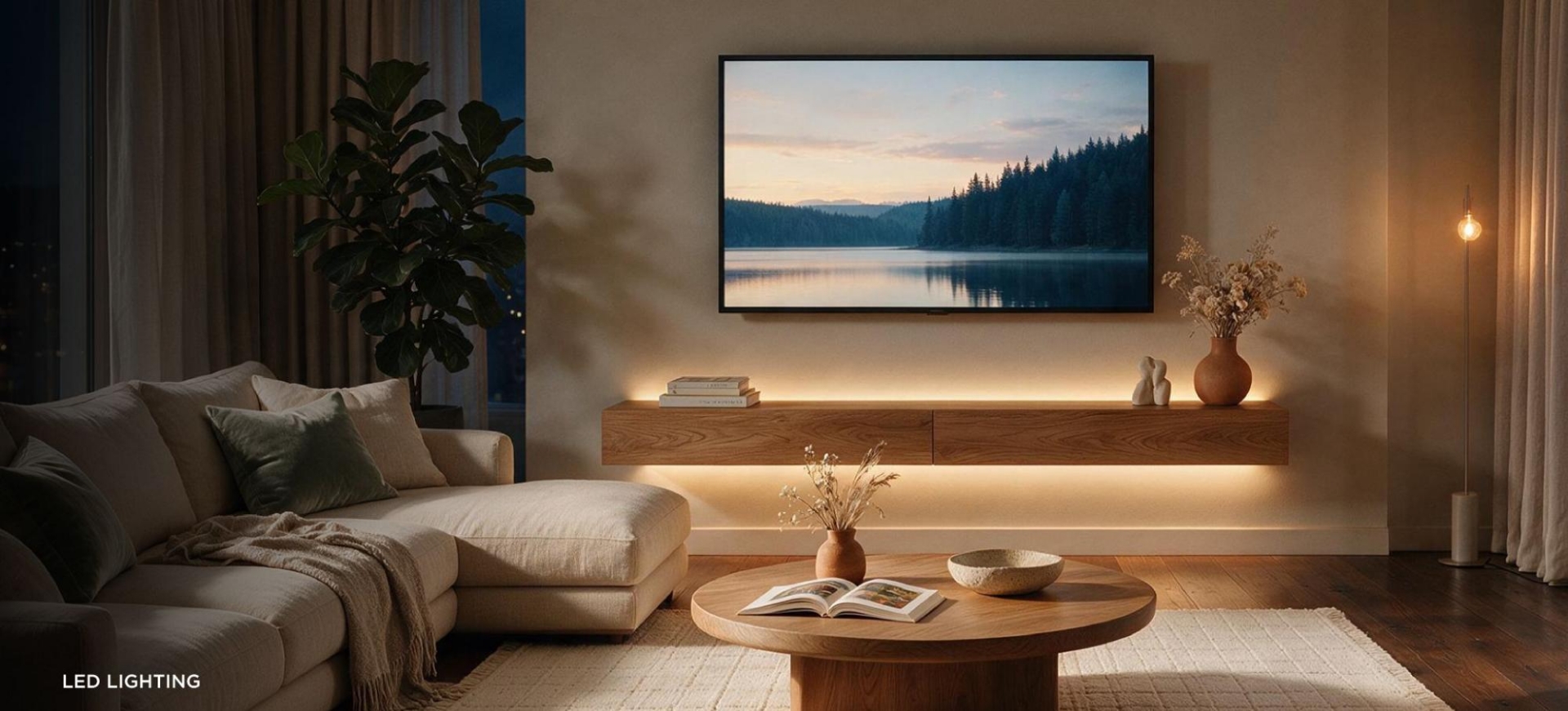
Choosing the right type of LED lights starts with understanding the technologies behind them and where they work best. Compared to traditional lighting, LEDs consume up to 80% less energy, last between 25,000 and 50,000 hours, and require minimal maintenance. From LED bulbs and panel lights to spotlights and strip lights, each option offers unique benefits to create an energy-efficient, comfortable, and well-lit home.
Lighting has come a long way over the years. Today, LEDs, or Light Emitting Diodes, have become the preferred choice for homes, offices, and commercial spaces because they offer excellent energy efficiency, longer lifespan, and better lighting quality. However, many people are unaware that there is more than one type of LED lights. From the technology behind the LEDs to the fixtures used in different spaces, each serves a unique purpose.
At Jaquar, we believe that choosing the right lighting starts with understanding the options available. Knowing the different type of lights can help you make informed decisions that improve both functionality and aesthetics.
Understanding the Technologies Behind LED Lights
Before choosing a lighting fixture, it helps to understand the LED technology inside it. Different technologies are designed for different applications.
1. SMD (Surface Mounted Device) LEDs
SMD is one of the most widely used LED technologies today. Multiple LED chips are mounted directly onto a circuit board, allowing them to produce bright and uniform illumination. These are best suited for LED bulbs, batten lights, panel lights and strip lights.
Benefits:
- High energy efficiency
- Uniform light distribution
- Suitable for both residential and commercial lighting
- Available in different wattages and colour temperatures
For everyday lighting, SMD technology is one of the most versatile type of LED lights available.
2. COB (Chip on Board) LEDs
COB technology places multiple LED chips close together on a single board, creating one powerful light source. Unlike SMD LEDs, COB lights deliver higher brightness with minimal glare and excellent beam control. These are best suited for downlights, spotlights, track lights and accent lighting.
Benefits:
- Higher lumen output
- Better beam focus
- Excellent colour consistency
- Ideal for highlighting artwork, decor, or architectural elements
COB LEDs are often preferred when precision lighting is required.
3. OLED (Organic Light Emitting Diode)
OLED technology is different from traditional LEDs because it uses organic compounds to produce light. Instead of creating a focused beam, OLED panels emit soft, diffused illumination across an entire surface. They are ideal for decorative lighting, premium interiors, architectural installations and designer lighting fixtures.
Benefits:
- Ultra-thin construction
- Soft, glare-free illumination
- Modern and elegant appearance
- Flexible design possibilities
Although still less common than SMD and COB, OLED represents the future of premium lighting design.
4. Bicolour, Tricolour and RGB LEDs
Bicolour, tricolour and RGB LEDs can produce multiple colours from a single LED, with the colour output changing based on the flow of current.
For example: A bicolour LED can produce either red or green light, while a tricolour LED can produce red, green, or a combination of both to create yellow. RGB LEDs use red, green, and blue to produce these colours individually or in combination, creating a wide spectrum of colour possibilities.
Benefits:
- Two or more colours from the same LED
- Colour tone can be changed based on the time or occasion
- Space-saving design
- Efficient and precise colour control
These LEDs are particularly suitable for film-making and photography, indoor and mood lighting, and event management, including weddings, parties, and nightclubs.
What are the Different Types of LED Light Fixtures?
While technologies like SMD, COB, and OLED determine how an LED performs, the fixture determines where and how it is used. Understanding these different type of lights will help you choose the right lighting solution based on the size, purpose, and design of your space.
1. LED Bulbs
LED bulbs are the most common and versatile lighting solution, making them suitable for almost every room in your home. They can easily replace conventional bulbs while consuming significantly less electricity and lasting much longer. They are available in a range of brightness levels and colour temperatures, allowing you to create a warm, cosy atmosphere or a brighter, more functional space.
When choosing an LED bulb, look for one with a CRI (Colour Rendering Index) of 80 or above, as this ensures colours appear more natural and vibrant. Most quality LED bulbs also offer a lifespan of 25,000 hours or more, making them a reliable, low-maintenance lighting option.
2. LED Battens
LED battens are long, linear light fixtures that provide uniform illumination across larger spaces. They are an excellent replacement for traditional tube lights and are commonly used in kitchens, utility rooms, offices, garages, and workspaces.
Available in neutral white (4000K) and cool white (6500K) colour temperatures, LED battens offer excellent visibility for everyday tasks. Their energy-efficient design and long lifespan make them a practical choice for spaces where lights remain switched on for extended periods.
3. LED Panel Lights
LED panel lights are designed to provide soft, evenly distributed illumination across a wide area. Their slim profile and minimalist appearance make them a popular choice for modern interiors.
They are widely used in offices, conference rooms, hospitals, educational institutions, and contemporary homes. Depending on the application, LED panel lights are commonly available in 24W, 36W, and 48W variants, offering bright yet comfortable lighting without harsh glare.
4. LED Downlights
LED downlights are recessed into the ceiling to create a clean, uncluttered look while delivering focused illumination. They work well in living rooms, bedrooms, hallways, kitchens, and dining spaces where both aesthetics and functionality are important.
Most LED downlights feature beam angles between 36° and 60°, allowing you to choose between focused accent lighting and broader ambient illumination. They are also available in warm, neutral, and cool white colour temperatures to suit different spaces.
5. LED Strip Lights
LED strip lights are flexible lighting solutions that can be installed in places where traditional fixtures may not fit. They are commonly used for cove ceilings, under cabinets, wardrobes, shelves, staircases, and entertainment units to add depth and ambience.
For areas such as kitchens and bathrooms, choose LED strip lights with an IP65 or higher rating to ensure better protection against moisture and dust. They are also available in single-colour, tunable white, and RGB variants, allowing you to customise the look and feel of your space.
Light Every Space Smarter with Jaquar
Choosing the right type of LED lights is about more than just brightness. It involves selecting the right technology, fixture, and lighting characteristics to suit your space and lifestyle.
At Jaquar, we combine innovative LED technologies with thoughtfully designed lighting solutions to meet the needs of modern homes and commercial spaces. Whether you are looking for energy-efficient bulbs, elegant panel lights, versatile downlights, or stylish architectural lighting, we offer solutions that balance performance, aesthetics, and durability. We are committed to helping you create spaces that are brighter, smarter, and more comfortable for everyday living.
FAQs
The three primary LED technologies are SMD (Surface Mounted Device), COB (Chip on Board), and OLED (Organic Light Emitting Diode). Each is designed for different lighting applications, from everyday illumination to decorative and architectural lighting.
SMD-based LED bulbs, battens, and panel lights are among the most popular choices for homes because they offer energy efficiency, uniform brightness, and long service life.
COB LEDs produce a concentrated beam with higher brightness, making them ideal for spotlights and downlights. SMD LEDs distribute light more evenly and are commonly used for general lighting applications.
LED downlights and LED strip lights are excellent choices for false ceilings. Downlights provide clean ambient lighting, while strip lights create attractive cove lighting effects.
Most quality LED lights have a lifespan of 25,000 to 50,000 hours, depending on the product, usage, and operating conditions.
Yes. Combining ambient, task, and accent lighting using different LED fixtures helps create a balanced, functional, and visually appealing lighting design for your home or workspace.
LED lights use less energy, have a significantly longer lifespan and generally require less maintenance than traditional lighting options. They are also available in different colour temperatures, brightness levels and designs, making them suitable for a wide range of residential and commercial applications.
Yes, compatible LED lights can be dimmed using suitable dimmers and drivers. Dimmable lighting allows you to adjust brightness according to the activity or time of day. It can also help create different moods while potentially reducing energy consumption when lower light levels are sufficient.
LED lighting can influence how a space feels through its brightness and colour temperature. Warm white light can create a relaxed and welcoming atmosphere, while neutral or cooler light can provide a brighter, more focused environment.
Yes, LED lights are widely used for outdoor lighting, including gardens, pathways, facades and driveways. They offer energy efficiency, long service life and consistent illumination. For outdoor areas exposed to moisture or dust, choose fixtures with an IP65 rating for the installation environment.
 Bath :