


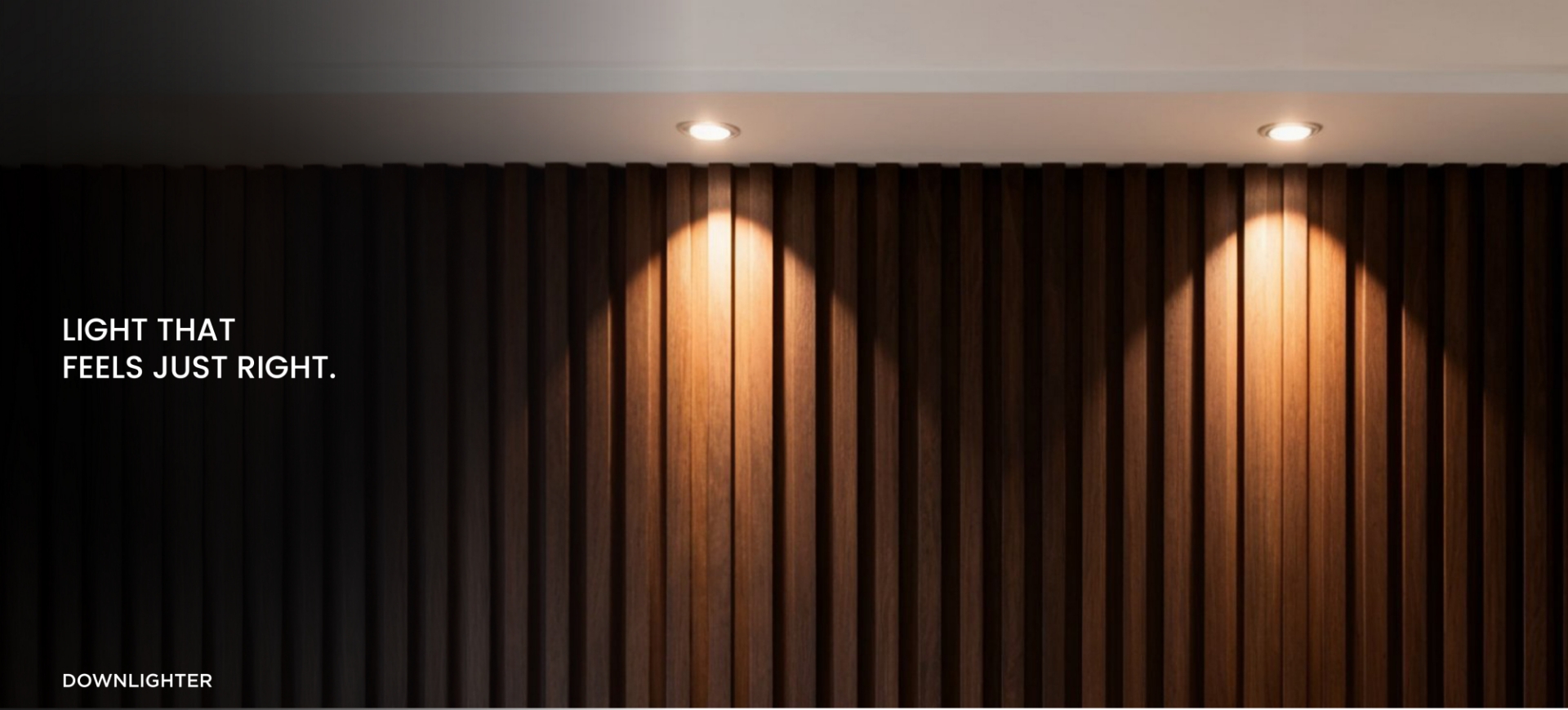
Indoor lighting is a fundamental element of architectural design, shaping how a space feels, functions, and looks. Be it renovating your home or upgrading a workspace, choosing the right lighting can transform the ambience, improve comfort, and even influence day-to-day energy consumption. In recent years, LED downlights have rapidly gained popularity because they provide cleaner illumination, better aesthetics, and long-term efficiency compared to traditional fixtures like linear fluorescent tubes, CFLs, and incandescent bulbs.
At Jaquar, we’ve seen a growing shift towards modern downlighting solutions as homeowners and professionals look for lighting that delivers both performance and visual elegance. Today, LED downlights are used across living rooms, kitchens, offices, shops, and hospitality spaces, delivering high-performance illumination alongside architectural elegance.
Before you make the switch, it’s helpful to understand what makes these fixtures superior and what features you should consider when choosing the right indoor lighting solution.
What are LED Downlights?
LED downlights are ceiling-mounted lighting fixtures that direct light downward to create focused or general illumination. They are typically recessed into the ceiling for a flush finish, though we also engineer surface light variants for interiors without false ceilings.
A typical LED downlight consists of:
- An LED light source
- A driver for power regulation
- A heat sink for cooling
- An outer trim or housing
- A reflector or diffuser for uniform light distribution
LED downlights are known for their ability to provide bright, even lighting without the harshness or flicker seen in older lighting technologies. They are often used for both ambient lighting and accent lighting, making them a versatile choice for modern indoor environments.
Why LED Downlights are Transforming Modern Indoor Lighting
Here are a few ways in which LED downlights transform modern indoor lighting:
Superior Energy Efficiency
LED downlights use significantly less power than incandescent or CFL lights. While a traditional 60W bulb may provide around 700 lumens, an LED downlight can achieve similar brightness using only 8–12W. Over months and years, this leads to substantial energy savings, especially in homes and offices where lights remain on for long durations.
Long Operational Life
Traditional bulbs typically last between 1,000 and 3,000 hours. By contrast, LED downlights can function for 25,000 to 50,000 hours. This reduces the frequency of replacements and helps maintain consistent lighting quality over many years.
Cleaner, More Comfortable Light
LED downlights produce uniform and stable illumination with:
- No visible flicker
- Better colour accuracy (higher CRI)
- Reduced glare
- More natural light distribution
This results in a more comfortable indoor atmosphere, suitable for reading, cooking, working, or relaxing.
Modern, Minimalistic Aesthetic
Unlike bulky fixtures or tubelights, LED downlights blend seamlessly into the ceiling. They provide a clean and unobtrusive look that complements contemporary interiors. Recessed and surface-mounted options allow them to be used in:
- Bedrooms
- Living rooms
- Hallways
- Offices
- Commercial interiors
This design flexibility makes them ideal for both functional and decorative lighting.
Lower Heat Emission
Traditional lights convert a large part of their energy into heat, which makes rooms warmer and reduces comfort. LED downlights remain cool to the touch, which helps maintain room temperature and lowers the load on air conditioning systems.
Lower Environmental Impact
LED downlights are mercury-free, consume less power, and last significantly longer. This reduces both carbon footprint and landfill waste, making it an eco-friendly alternative to older lighting technologies.
Compatibility with Smart Lighting Systems
Many LED downlights today support smart features such as:
- Dimming
- Motion detection
- App control
- Scene setting
- Daylight sensing
This makes them easier to customise and control for both homes and commercial spaces.
Technical Features to Look for When Choosing a Downlight
Selecting the right LED downlight involves more than just picking a design. Here are the key technical features you should evaluate:
1. Wattage and Lumens
- Wattage determines power consumption.
- Lumens indicate brightness.
Choose brightness based on your room size. For example:
- 8–12W for bedrooms
- 12–18W for living rooms
- 18–24W for kitchens or offices
2. Colour Temperature (CCT)
Measured in Kelvin (K):
- 2700K–3000K: Warm white for an inviting, intimate atmosphere
- 4000K: Neutral white for balanced lighting
- 5700K: Cool white for task-heavy spaces
3. Beam Angle
The beam angle decides how wide the light spreads.
- 24–40°: Accent lighting
- 60–120°: General ambient lighting
4. CRI (Colour Rendering Index)
A CRI of 80+ is good, but 90+ is ideal for areas where accurate colour representation is important, such as kitchens, wardrobes, and retail spaces.
5. Fixture Type
Depending on your ceiling:
- Recessed downlight for false ceilings
- Surface light downlight for concrete ceilings or low heights
- Deep recessed models for reduced glare
- Tilt or adjustable downlights for highlighting walls, artworks, or architectural features
6. Heat Sink Quality
A good aluminium heat sink ensures:
- Longer LED life
- Stable brightness
- Reduced heating
7. Driver Quality
Look for flicker-free drivers with built-in surge protection to ensure safe and stable performance.
Why Choose Jaquar LED Downlights
At Jaquar, we design our LED downlights to deliver long-lasting performance, consistent illumination, and high energy efficiency. Our downlights combine advanced optics with premium build quality, ensuring that every corner of your home or commercial space is lit beautifully and reliably.
Whether you are looking for recessed fixtures, surface-mounted options, or specialised architectural downlights, our indoor lighting range offers solutions that elevate both function and aesthetics. We invite you to explore our complete downlight collection on our website and discover lighting designed to enhance modern living.FAQs
Yes, LED downlights work well in living rooms, bedrooms, kitchens, bathrooms, and commercial spaces. You can choose wattage and beam angles depending on the room’s needs.
Not necessarily. Surface-mounted downlight options are available for homes with concrete ceilings or without false ceilings.
Most LED downlights last between 25,000 and 50,000 hours, depending on build quality and usage.
Many models are dimmable, but always check if the driver supports dimming before installation.
Yes. They consume far less power than incandescent or CFL lighting and significantly reduce energy bills.
Absolutely. Our downlights are engineered to handle long working hours, high performance, and consistent brightness, ideal for offices, shops, and hospitality spaces.