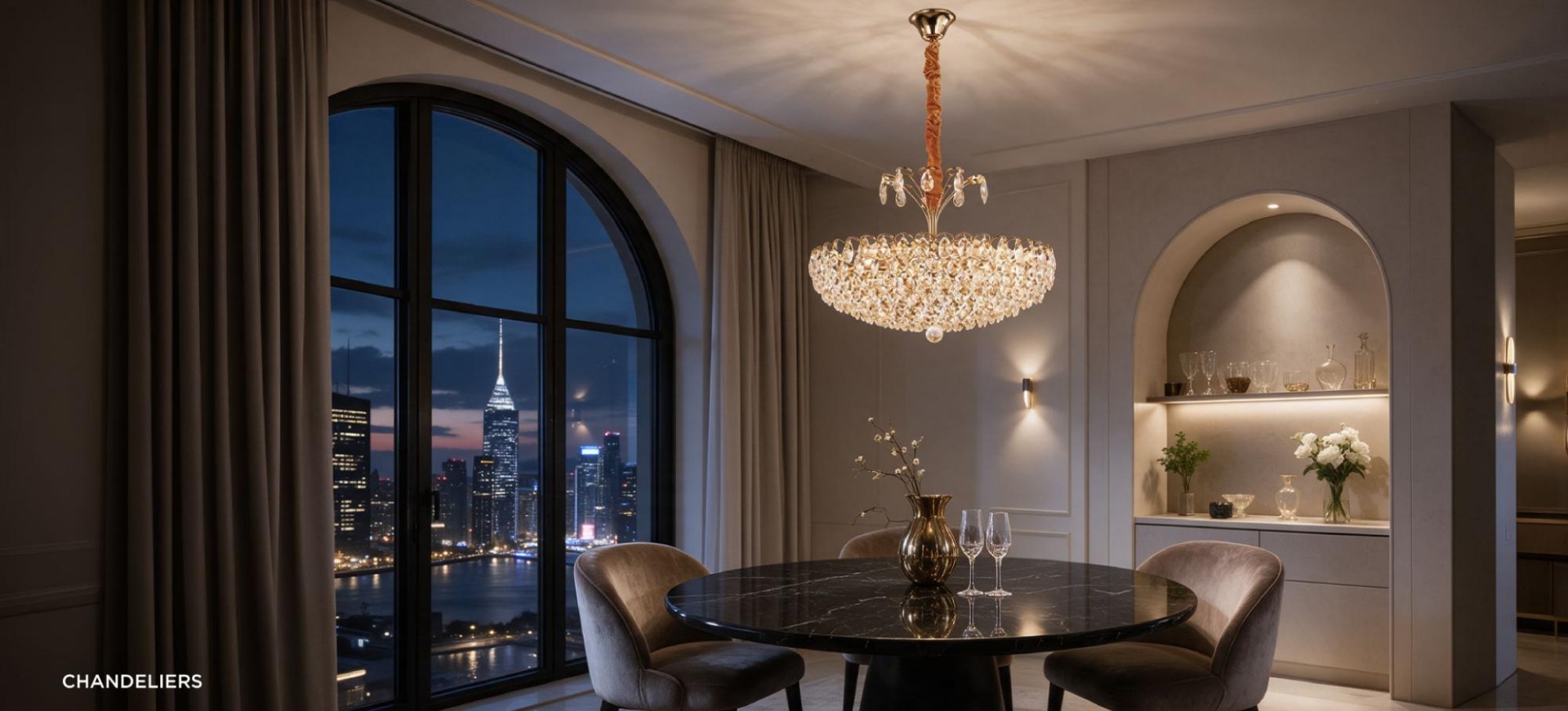
Decorative lighting adds character to your interiors while providing practical illumination. From chandeliers and pendant lights to wall-mounted fixtures, the right choices can highlight architectural details, complement your furniture and create a comfortable atmosphere throughout your home.
Lighting influences how you experience a space, draws attention to important design elements and helps create the right atmosphere for different occasions. While functional lighting ensures you can see clearly, decorative lighting adds personality and visual interest to your interiors.
From statement pieces in the living room to subtle lighting beside your bed, each fixture serves a different purpose. Understanding the different types of decorative lights can help you make informed choices that suit your interior style, available space and lighting requirements.
What is Decorative Lighting?
Decorative lights are light fixtures that combine illumination with visual appeal. Unlike lights selected primarily for visibility, these fixtures also contribute to the overall interior design. They are available in various shapes, sizes, materials and finishes, making it easier to find options for contemporary, traditional and minimalist homes.
Decorative lighting can serve several purposes, like enhancing interiors, creating a focal point, setting the mood and defining spaces.
What are the Types of Decorative Lighting for Home?
Different fixtures offer different lighting effects. Knowing how each type works can help you choose the right options for individual rooms.
1. Chandeliers: A Statement for Larger Spaces
Chandeliers are suspended ceiling fixtures that often feature multiple light sources arranged around a central structure, serving as a striking focal point in rooms with sufficient ceiling height. They work particularly well in living rooms, dining areas, entrance halls and stairwells.
When selecting one, consider the ceiling height, room dimensions and surrounding furniture. Choose a design that complements your interiors, whether you prefer a contemporary geometric style, a traditional silhouette or a more understated finish.
2. Pendant Lights: Focused Illumination with Style
Pendant lights hang from the ceiling using a rod, cord or chain. They are available in a wide range of designs, from simple cylindrical fixtures to sculptural pieces that add visual interest. These lights are particularly useful above kitchen islands, dining tables, bedside tables and reading corners. They direct light towards a specific area while helping establish a clear visual focus.
You can also hang multiple pendants in a row to illuminate a longer surface. Ensure they are positioned at a suitable height so that they do not obstruct movement or the line of sight.
3. Wall Lights: Lighting That Makes Use of Vertical Space
Wall lights are mounted directly onto walls and can provide ambient illumination, highlight design features or add light to areas where ceiling fixtures may not be sufficient. They are suitable for hallways, bedrooms, living rooms, staircases and bathroom mirror areas.
Upward-facing wall lights cast light towards the ceiling, creating a softer effect. Downward-facing options can highlight textured walls, while fixtures that direct light both upwards and downwards can add depth to an interior.
4. Table and Floor Lamps: Flexible Lighting for Everyday Use
Table and floor lamps offer a convenient way to introduce decorative lighting without making permanent changes to your interiors. Table lamps work well on console tables, side tables and desks. Floor lamps are useful beside sofas, reading chairs or in corners that need additional illumination.
Choose lampshades and finishes that complement your existing decor, and select suitable brightness levels for reading, relaxing or creating a softer ambience.
5. Track and Accent Lights: Highlighting Interior Details
Track lights and adjustable spotlights can draw attention to artwork, display shelves, textured walls and architectural features. They are useful when you want to highlight specific elements without illuminating the entire room with the same intensity.
For artwork and decorative displays, consider the beam angle, light intensity and colour rendering index (CRI). A CRI of 80 or above is a useful starting point for many residential applications, while higher CRI options can be preferable when accurate colour representation matters.
How to Choose the Right Decorative Lighting?
Selecting the right decoration light for home interiors involves more than matching a fixture to your furniture. Consider these factors before making a decision.
- Room Size and Ceiling Height: Large fixtures need sufficient space around them. Measure your room and ceiling before choosing a chandelier or pendant.
- Purpose of the Lighting: Decide whether you need general illumination, focused light for an activity or an accent that highlights a design feature.
- Colour Temperature: Warm white light, around 2700K–3000K, generally creates a cosy atmosphere. Neutral white light, around 3500K–4000K, can work well in areas where a clearer, more neutral appearance is preferred.
- Materials and Finishes: Glass, metal and fabric can produce different visual effects. Choose materials that complement your furniture, fittings and overall interior style.
- Brightness and Glare: Consider the fixture's lumen output, shade design and light direction. Decorative appeal should not come at the expense of visual comfort.
Give Your Interiors a Distinctive Touch with Jaquar
From creating a focal point with a chandelier to adding focused illumination with a pendant or a softer glow with a wall fixture, each choice contributes to the overall character of your home. At Jaquar, we offer chandeliers, pendant lights and wall lights designed to bring together aesthetics and practical lighting. Our range gives you the flexibility to explore different styles, complement your interiors and select fixtures suited to different spaces and lighting needs.
To find the right balance of design, comfort and everyday functionality, head to our website!
FAQs
Yes, provided you choose fixtures with suitable brightness and light distribution. Some decorative fixtures provide broad illumination, while others are better suited to accent lighting. Combining different types helps ensure that your room is both visually appealing and practical.
No. Chandeliers are available in different sizes and designs, including compact options for smaller rooms. The important thing is to choose a fixture that suits the room's dimensions and ceiling height without overwhelming the space.
Yes. Pendant lights can be installed beside the bed as an alternative to bedside lamps, freeing up space on bedside tables.
Ceiling lights generally illuminate a broader area from above, while wall lights can provide softer ambient illumination, focused lighting or decorative highlights.
There is no fixed number. It depends on the room's size, layout, ceiling height and activities. Start by identifying the areas that need general, task and accent lighting, then select fixtures that meet those requirements without making the room feel cluttered or excessively bright.



 Bath :