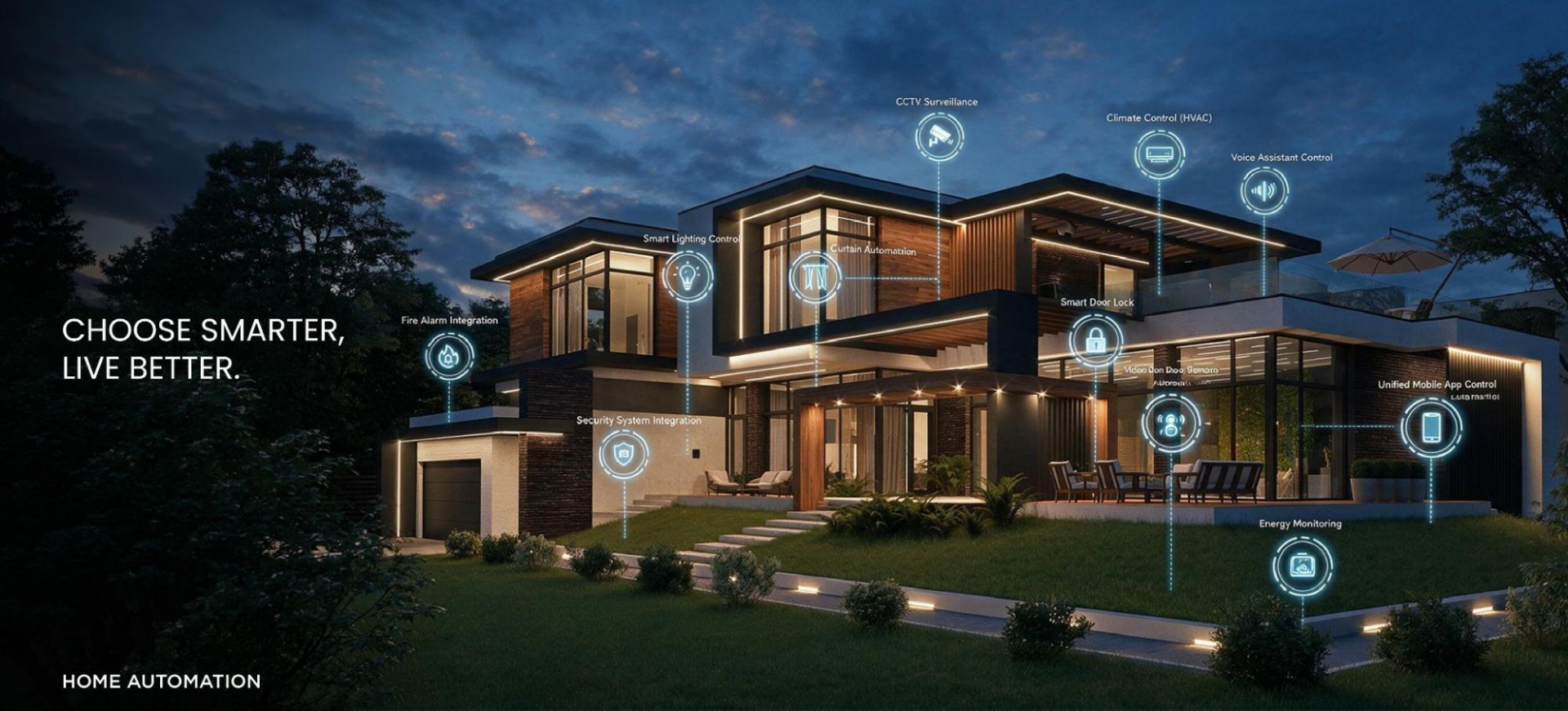
Imagine waking up to curtains that open automatically, lights that adjust to the morning sunlight, and a home that is already set to your preferred temperature. From controlling lighting and appliances to enhancing security and energy efficiency, home automation systems are changing the way we experience our homes. However, before investing in a system, it is important to understand how it works, what features to look for, and whether it can adapt to your future needs.
What is Home Automation?
Home automation refers to the use of connected technologies that allow you to control and automate various functions in your home. These systems connect different devices and let them communicate with one another through a central platform.
With modern smart home solutions, you can manage:
- Lighting
- Fans and air conditioning
- Curtains and blinds
- Security systems
- Smart locks
- Entertainment devices
- Sensors and schedules
The goal of smart home automation is simple: to make everyday living more comfortable, convenient, and efficient.
Why Are More Homeowners Investing in Home Automation?
The idea of a connected home is no longer reserved for luxury properties. Modern home automation systems are becoming increasingly popular because they simplify daily routines and improve the overall living experience.
Some of the biggest reasons people are investing in smart home solutions include:
- Greater convenience and comfort
- Improved energy efficiency
- Enhanced home security
- Remote access and control
- Better management of daily routines
- Increased property value
A thoughtfully designed system does more than automate devices; it creates a home that responds to your lifestyle.
What Features to Look for Before Investing in Home Automation?
Before making a decision, it is important to evaluate what features matter most to your household.
1. Easy and Intuitive Controls
Technology should make life simpler, not more complicated. Look for home automation systems that offer user-friendly mobile applications, simple touch controls, easy scene creation and intuitive interfaces for all family members.
2. Remote Access and Connectivity
One of the biggest advantages of smart home automation is the ability to control your home from anywhere. Remote access allows you to:
- Switch the lights on or off
- Check connected devices
- Create schedules
- Adjust settings while travelling
3. Voice Control Compatibility
Voice assistants have become an essential part of modern homes. A good automation system should integrate seamlessly with Amazon Alexa, Google Assistant and Apple Siri. With voice integration, everyday tasks become even simpler. You can adjust lighting, manage scenes, and control devices with simple voice commands.
4. Energy Efficiency
One of the most practical benefits of home automation is its ability to reduce unnecessary energy consumption. Intelligent systems can:
- Turn off lights when rooms are empty
- Adjust brightness automatically
- Operate devices according to schedules
- Optimise power usage throughout the day
5. Security and Peace of Mind
Security is becoming an increasingly important consideration for homeowners. Modern smart home solutions can include:
- Motion detection
- Smart surveillance
- Integrated lock systems
- Real-time notifications
How to Choose the Right System Topology?
Different homes require different installation approaches. Understanding the available options can help you make the right investment.
Wired Systems
In a wired setup, all devices are connected through physical cables. Benefits include:
- Stable communication
- Reliable performance
- Ideal for new constructions
Wireless or Retrofit Systems
Wireless systems are ideal for existing homes because they require minimal structural changes. Benefits include:
- Easy installation
- Less disruption
- Faster upgrades
Hybrid Systems
Hybrid systems combine wired and wireless technologies. Benefits include:
- Greater flexibility
- Reliable connectivity
- Easy future expansion
We offer solutions that work across all three configurations, allowing homeowners to choose what best suits their space and requirements.
Think About Future Scalability
When investing in home automation systems, it is important to think long term. Your needs today may not be the same a few years from now.
A scalable system allows you to:
- Add more devices later
- Expand to additional rooms
- Introduce new technologies
- Upgrade functionality without replacing the entire setup
Jaquar automation systems are designed with smart scalability in mind, allowing them to grow effortlessly with your changing lifestyle.
Where Can Home Automation Be Used?
While most people associate home automation with residential spaces, its applications go far beyond homes. Our solutions are suitable for:
Residential Spaces
- Villas
- Apartments
- Penthouses
- Farmhouses
- Builder floors
Commercial Spaces
- Offices
- Boardrooms
- Retail stores
- Malls
- Industrial facilities
Hospitality
- Hotels
- Restaurants
- Banquet areas
- Guest rooms
- Spas
Institutional Spaces
- Schools and colleges
- Museums and galleries
- Airports
- Railway stations
Is Home Automation Worth the Investment?
For many homeowners, the answer is yes. A well-designed automation system delivers value through:
- Better comfort and convenience
- Lower energy consumption
- Improved security
- Enhanced property appeal
- Greater control over everyday living
More importantly, it creates a home that adapts to your routines rather than requiring you to constantly adjust your environment manually.
Make Your Home Smarter with Jaquar
Investing in home automation systems is not just about adding technology to your home. It is about creating spaces that are more comfortable, secure, and efficient.
At Jaquar, we combine intelligent technology with thoughtful design to deliver automation solutions that simplify everyday living. From seamless device compatibility and voice control to advanced security features and energy-efficient lighting, our systems are designed to integrate effortlessly into modern lifestyles.
Whether you are building a new home or upgrading an existing one, we help you create an environment that feels intuitive, connected, and truly future-ready.
FAQs
Not necessarily. Wireless and hybrid systems can often be installed with minimal disruption, making them suitable for both new homes and existing properties.
Yes. Wireless and hybrid systems can be installed in existing homes with minimal disruption and without extensive rewiring.
Yes. Most modern smart home solutions offer mobile applications that allow you to monitor and control your home remotely.
Yes. Intelligent scheduling, sensor-based controls, and automated lighting can significantly reduce unnecessary energy consumption.
No. Modern systems are designed with simple interfaces, mobile apps, touch panels, and voice commands that make everyday use extremely easy.
Yes. A scalable system allows you to add new devices, rooms, and features over time without replacing the entire setup.


 Bath :